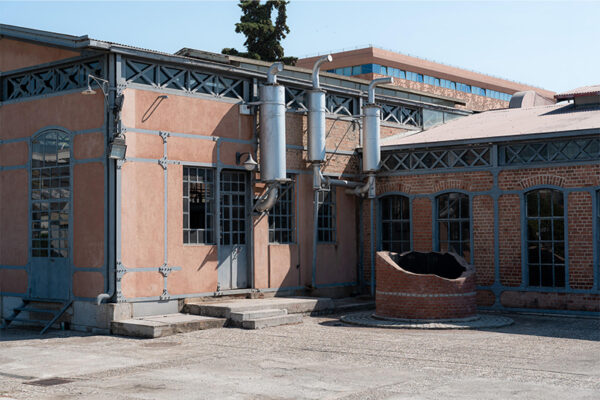
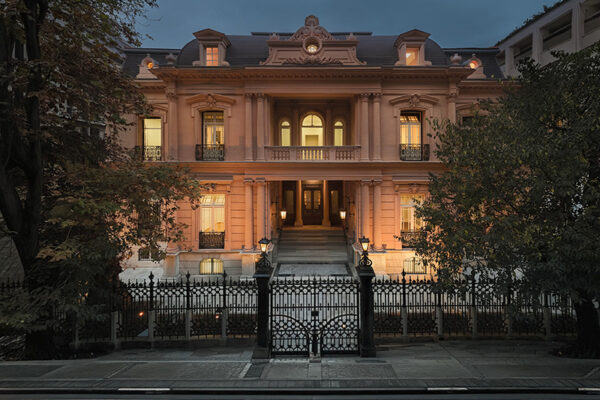
Built in 1894, this building originally served as the city's central pumping station. Following the completion of its restoration and reuse study, between 1997 and 2000, it now houses the... read more →
An eclectic building dating from 1900-1910, located in an area then known as Behtsinár. After its restoration in 2014 by the Municipality of Thessaloniki, it stands as a landmark at... read more →
A characteristic example of Macedonian architecture built in the first half of the 19th century as a residence. It was restored in 1995 and today houses the Thessaloniki Architects Association,... read more →
Built in the mid-19th century as the mansion of the merchant Abbott, and after its reconstruction in 1903-4, this historic building acquired successive uses, preserving traces of its turbulent history.... read more →
Built in 1929 following an architectural competition, the TCCI building is a distinctive example of late Neoclassicism and the city’s only building with Ionic columns. OPENING HOURS 21/11 - 22/11... read more →
The building was constructed in 1928 as a hotel named Excelsior, right in the heart of Thessaloniki’s commercial and business district. Architecturally, it stands out for its three-sided, perfectly symmetrical... read more →
Dating back to the 15th century, the tower constitutes the only surviving part of the city's sea wall, which was demolished in 1874. This impressive fortification work belongs today to... read more →
A two-storey building, representative of 19th-century traditional domestic architecture, in which Kemal Atatürk was born and lived. Since 1953, it has housed the Atatürk Museum, which has recently undergone restoration... read more →
An eclectic mansion in the Exoches District, built in 1912, which combines Baroque and Art Nouveau elements. Its distinctive features include elaborate balconies and open spaces arranged without adhering to... read more →
The villa in the Exoches District, dating back to 1905, was originally constructed as the residence of the Turkish General, Seifullah Pasha. Its façade combines Renaissance, Neoclassical, Baroque, and Art... read more →